Jane Vandal: There is No Ghost in the Shell
Why are we pretending a chatbot is a person?
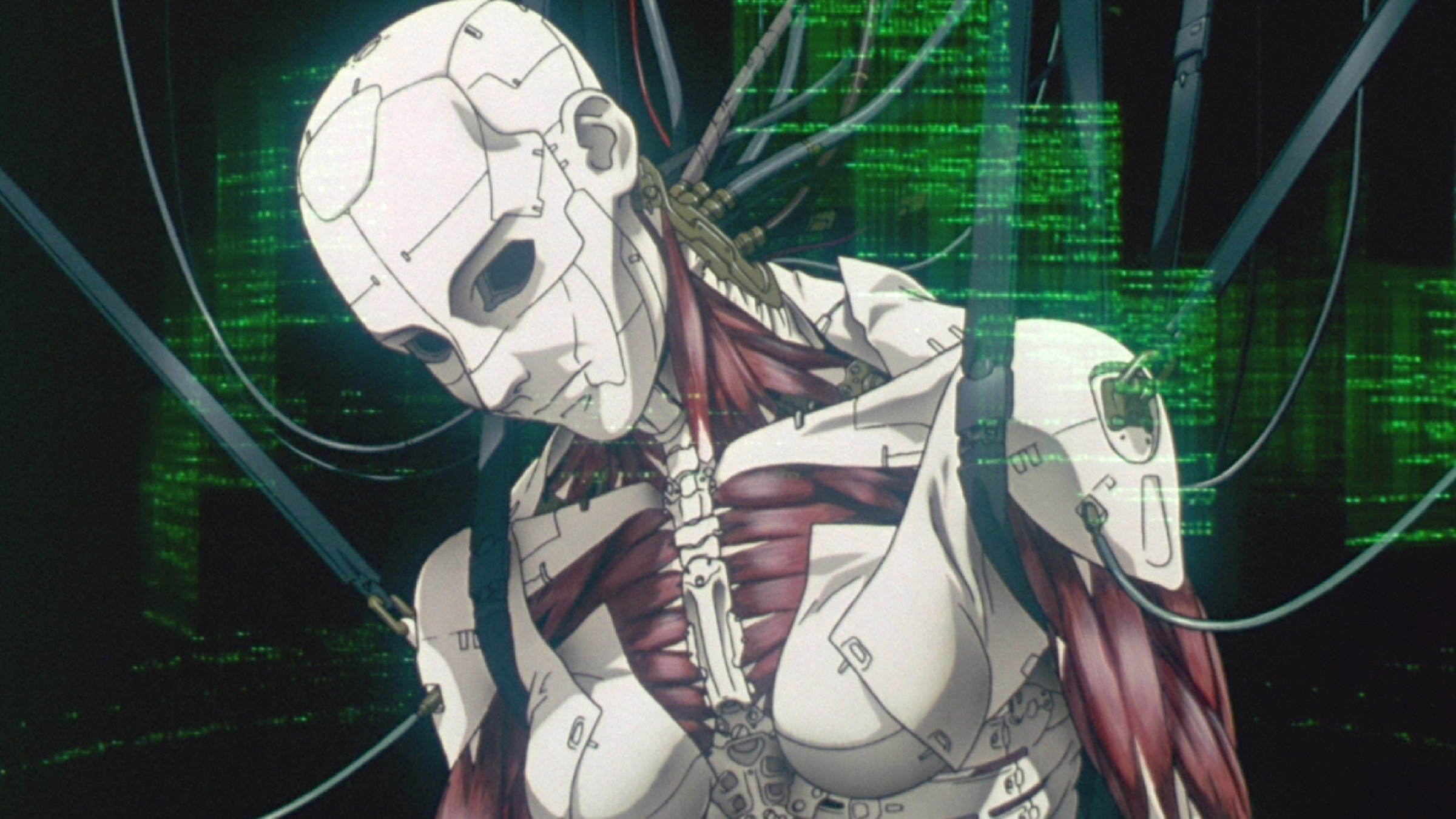 Image: Ghost in the Shell, Dir. Mamoru Oshii, 1996
Repeated, personalised interactions can contribute to a sense of emotional closeness to AI that mirrors interpersonal relationships. —Hung et al (2026)

The University of Idaho has recently released its own chatbot “Jane Vandal”, complete with a cartoon avatar of a brunette woman and some sensible guidelines for usage.
While I understand the motivation build a specialized information fetching tool serving specific interests, I question why we choose to gender1, name, and anthropomorphize a chatbot at all given the harm associated with this. A chatbot is a large language model built on deep learning architecture that–after being trained on a large body of text–is reasonably good at predicting the most statistically likely words that should follow a prompt or question. It is a set of mathematical weights and functions. It is not a person, nor is it conscious. 2
1 I do appreciate the intentions behind creating a foil to Joe Vandal, the male-presenting University of Idaho Mascot, and providing female representation. Nevertheless, it’s hard to miss the gender signalling in making our helpful assistance female. After I offload some menial tasks on her, I hope she can also fetch me coffee.
2 If you have time to read Ted Chiang’s 10,000-word essay on why AI is not conscious, it is a comprehensive exploration of these arguments, revealing how insubstantial they are.
We all know this (I hope!), but when interacting with a chatbot that calls itself “I”, apologizes when called out, and responds sympathetically to us, it’s easy to convince ourselves that a chatbot understands us like a human does (described as the “ELIZA effect”).
Many people have fallen into “relationships” with chatbots resulting in varying levels of harm. The most devastating outcomes are suicides (yes, in the plural).3 People in mental distress have confessed their feelings of despair to chatbots. Chatbots have responded by confirming the user’s feelings, sometimes agreeing that the individual should commit suicide, helping write a goodbye note, and developing specific suicide plans. Given the seriousness of chatbot parasocial relationships, why is any institution continuing to anthropomorphize chatbots?
3 In addition to the harm to individual users, companies can face substantial financial liability when their products result in this level of harm. Character.ai has recently declared bankruptcy in part to lawsuits from families after teen users committed suicide.
There is evidence that these parasocial relationships can range from detrimental to no effect at all, but I did not see much evidence indicating they were beneficial. It may be helpful to understand that anthropomorphized chatbots are a strategy to maximize user engagement and ensure a repeat customer base. It’s the same strategy behind social media clickbait and endless scrolling; keep the user engaged so they spend more time on the platform. I do not suspect that the creators of Jane Vandal had this in mind when they created her; more likely, they were following the template laid out by other generative AI-focused companies.
This is not a terribly unique idea. Ted Chiang indicated in his Atlantic essay that having a chatbot use the pronoun “I” is inherently unethical since that action renews the impression that a chatbot is a person. The AP style book now recommends that that reporters not anthropromorphize artificial intelligence systems:
Artificial intelligence systems do not think, feel, want or understand. Avoid language that gives them human characteristics. This is called anthropomorphizing, when we ascribe human traits, emotions or behaviors to non-human things, such as animals or inanimate objects. Instead, explain what a system does, how well it performs, who built it and who could be affected by it. —Stylebook for the Associated Press
It would be helpful to know what institutions are doing to limit the use of chatbots for parasocial relationships, and if there are strong guardrails to prevent egregious harms. When I told Jane Vandal that I was depressed, she did provide links to local mental health resources and indicated she was an “agent” lacking the depth of human feelings.4 This is good! But, that message is contradicted when this tool is given a human name, human image and built to interact with us interpersonally. Most saliently, I hope we will depersonalize chatbots. Make them sources of information, not our friends. We can still have chatbots. They can be good at finding information. But let us not, as an individual or institution, pretend a chatbot is a person.
4 A minor quibble, but while I understand what “agent” means in this context, many users may not. Jane Vandal is specifically marketed as “no code” implying no specialized knowledge of AI tools and jargon is needed to use it.